


Share & more
Some 125,000 people have been forced from their homes across Yemen in the past two weeks as a major new escalation linked to both the US-Iran conflict and Yemen’s own nearly 12-year war deepens hardship for millions already struggling to survive.
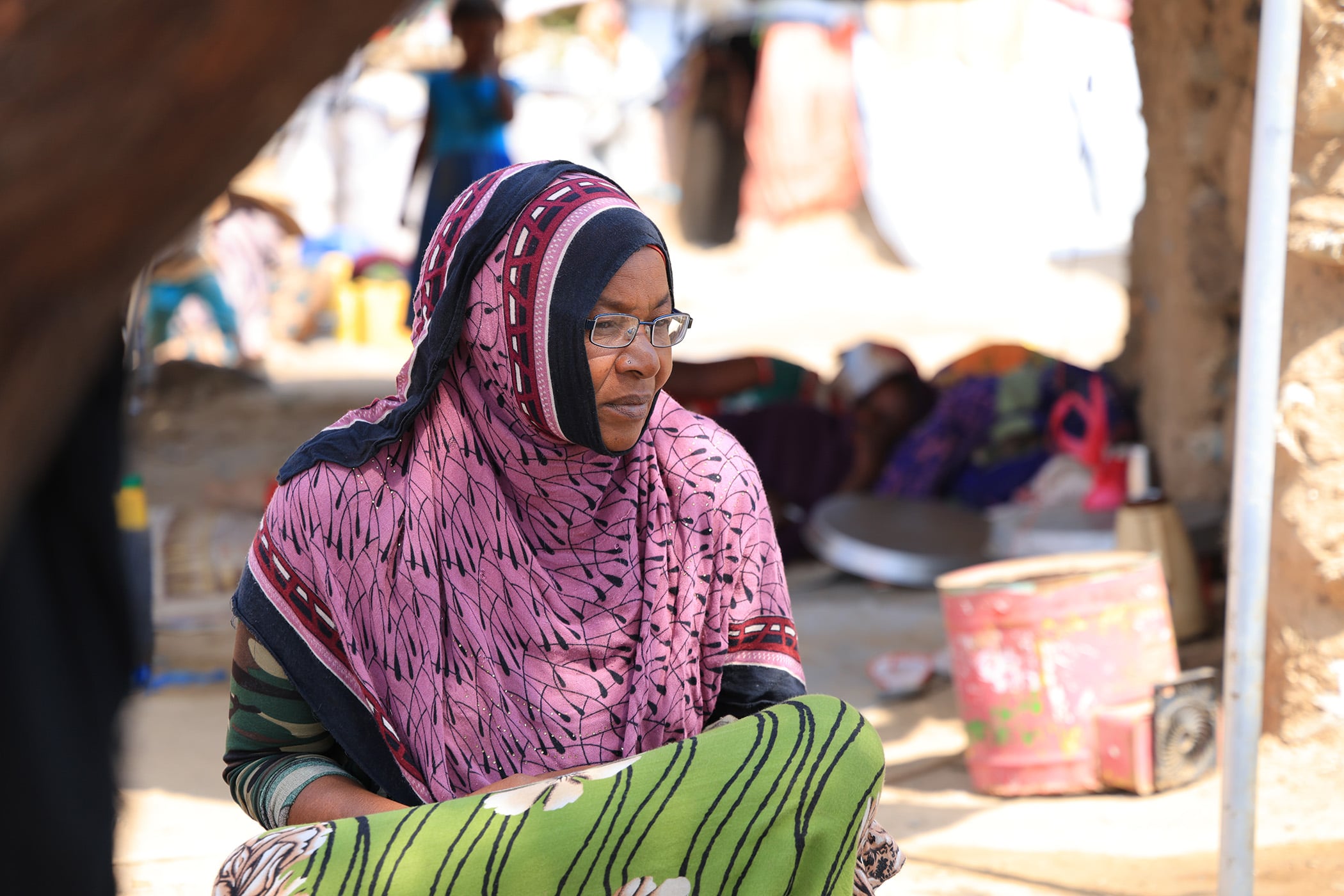
Hafedhaa Murshed had spent more than five years in a displacement site in western Taiz province before clashes broke out on 3 September near the site where she, her husband, and their seven children were staying.
As the fighting drew nearer, the family grabbed their most valuable and lightest possessions. “We walked nearly three kilometres on foot,” Murshed told The New Humanitarian, speaking from the makeshift camp elsewhere in Taiz where they are now staying. “There were no vehicles to transport our belongings, so we arrived here with only a few kitchen utensils and a blanket.”
Taiz has long been a flashpoint of Yemen’s war. Fighting, sieges, and restrictions on aid and trade access have been hallmarks of life in the southwestern province for years. Houthi rebels and a coalition of fighters allied with the internationally recognised government have been fighting since early 2015, and Taiz lies between territory currently controlled by the Houthis and the Saudi-backed government.
A 2022 truce had ushered in a period of relative calm, but the Houthis (officially called Ansar Allah) launched an offensive on multiple fronts in early September, part of their bid to control the strategically important Bab al-Mandeb strait. Saudi Arabia has hit back with airstrikes and the United States has reportedly sent advisers to aid the kingdom’s military efforts, raising fears of a return to all-out war.
Controlling the strait allows the Houthis – who have ties to Iran – to further block Saudi Arabia from exporting oil via the Red Sea (the kingdom has been using the strait to export oil since Iran effectively closed the Strait of Hormuz). It is also part of the longstanding stated goal of the Houthis to take the Red Sea coast from Saudi-backed fighters.
While the reasons behind the new offensive are murky and complex, the impact on Yemen’s most vulnerable civilians – among them more than 5.2 million who were already displaced before this uptick in fighting – have been clear and direct.
Like many others, Murshed was already dealing with extreme poverty before her latest displacement. But she had been staying with another displaced relative, who at least shared their mattresses and blankets.
The UN reports that 125,000 people have been newly displaced in just two weeks and the numbers are rising quickly – including tens of thousands in Taiz alone. Entire communities are being forced from their homes, and some are now fleeing the country altogether, with the UN’s migration agency reporting that 2,000 people have reached Djibouti's northern shores.
With the response to Yemen’s humanitarian crisis already chronically underfunded, and now compounded by the economic impacts of the US-Iran war, people like Murshed are finding themselves trapped in an endless cycle of displacement, with little to no assistance.
“Our life wasn’t perfect, but at least we had a safe camp,” Murshed said of life at the previous site, which was already her family’s second displacement. “The fighting has forced us to flee again, and to begin the suffering of displacement and starting from scratch again.”
Fuel prices and day wages
Long before Murshed and her family were forced to leave their camp, Yemen’s economic crisis was already battering people like her far from the front lines.
“Even before we fled last week, we lacked many of the basics because work opportunities were scarcer than before. Men would leave in the morning looking for work and return by midday empty-handed,” Murshed explained.
The growing regional fallout from the Iran-US conflict triggered a sharp surge in fuel prices across government-controlled areas in Yemen. A 20-litre container of diesel has jumped from 25,000 YER ($17) in May – several months after the war began – to 45,000 YER ($30) today.
A source at the Yemeni Petroleum Company in Aden told Reuters in May that the rise in fuel prices – even back then – was the result of a supply crisis and rising global fuel prices driven by the regional conflict and the closure of the Strait of Hormuz.
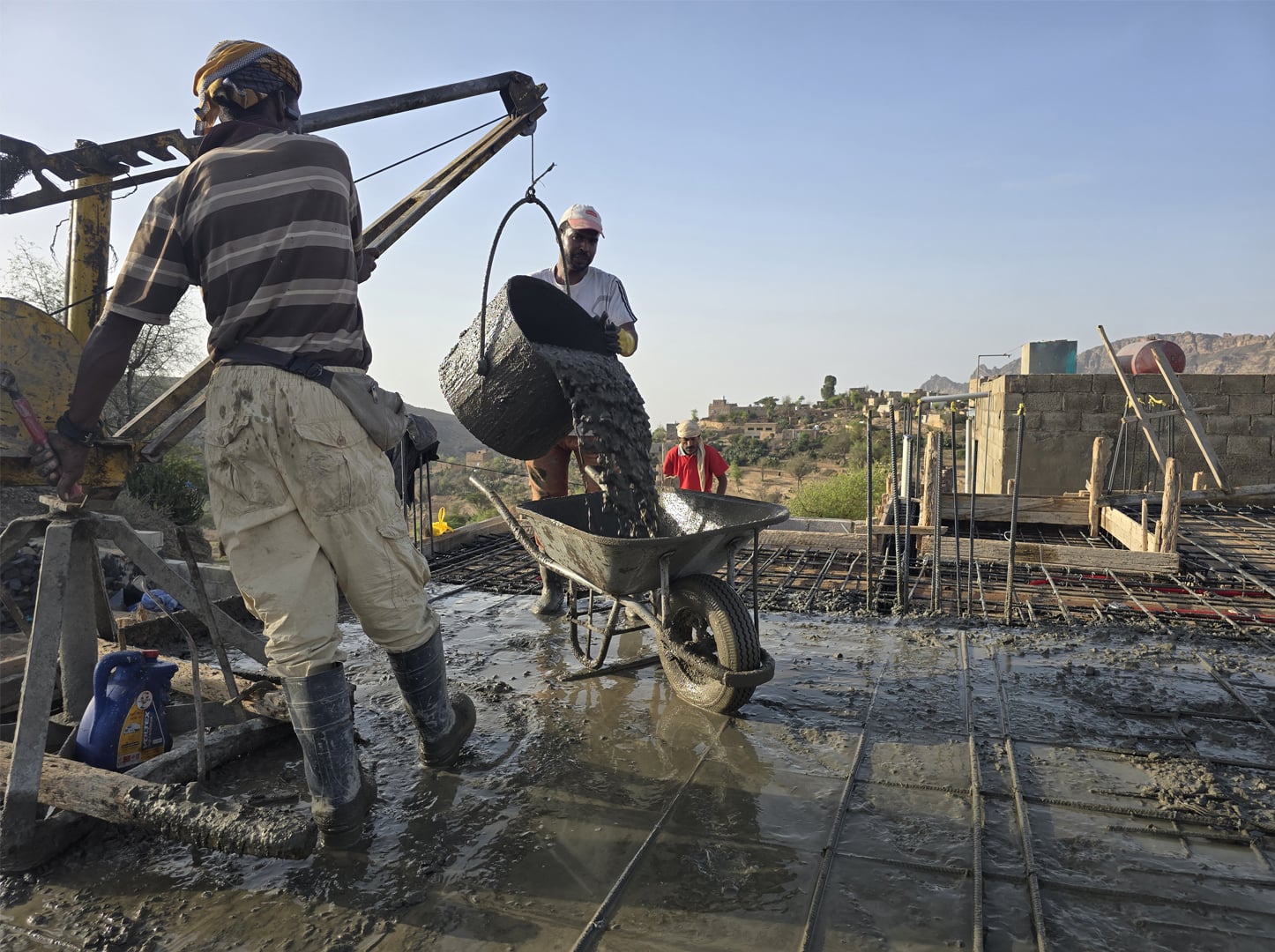
That surge has had a cascading effect since, driving up the cost of goods and services that are dependent on fuel and transportation – including construction materials – hitting day labourers first. The only jobs that many displaced men like Murshed’s husband can get now are day-by-day jobs on construction sites or loading and unloading building supplies at local shops.
“I don’t remember a time in my life when we ate only bread and tea for breakfast and dinner like we do now. We buy just enough food to stay alive because our income doesn't allow for more, and we can't afford the food we actually want.”
Murad Thabet, a construction worker in his 50s who has worked in the industry across various parts of Yemen, described the current crisis as “the worst in his life”.
“I have been working for around 40 years, but these days are the worst,” he told The New Humanitarian. “The price of building materials is rising dramatically, so many contractors and property owners have halted work until things stabilise.”
Thabet, who is displaced from his village in the southwest of the province and rents a home in Taiz city for his wife and three children, said many day labourers are struggling to provide their families with basic necessities.
“I don’t remember a time in my life when we ate only bread and tea for breakfast and dinner like we do now,” he added. “We buy just enough food to stay alive because our income doesn't allow for more, and we can't afford the food we actually want.”
Thabet stressed that his main problem is the lack of job opportunities rather than the cost of food itself. This has long been the case in Yemen, where economic collapse as a result of their own 12-year war has been a major driver of hunger.
US-funded food insecurity monitor FEWS NET has consistently said that displaced people and those without income are of greatest concern across a country where 15-16 million people are expected to need food aid through September – not taking into account this month’s developments.
“If we have an income, we can buy food even if prices rise a bit,” said Thabet. “But when we have no work, as is the case now, we cannot afford food even if it is cheap.”
Competition and sacrifice
Thabet said he is among many men who wait at the same spot in Taiz every morning looking for work. Most leave disappointed. “When someone arrives looking for one labourer, around 10 people run after him and accept any wage because they desperately need work,” he said.
Abdullah Mohammed, a displaced father of three in his late 30s, recently lost his job as a construction worker and guard at a building site in Taiz. Before the building’s owner suspended construction in May and dismissed all the workers, it was enough for Mohammed to rent a home and take care of his family.
“The building owner told us he would resume construction when things calm down and prices drop, but it seems he won’t anytime soon because things are getting worse and prices keep going up,” Mohammed told The New Humanitarian.
He has now taken his oldest child out of school, bringing the 12-year-old boy along with him to collect empty plastic bottles they can sell for a small amount of money. “Education isn’t our priority right now – having enough food is,” Mohammed said. “Once we have enough food on the table and I have a steady source of income, I will send my children back to school and provide them with everything they need, even the toys I used to buy them every month.”
An August Save the Children survey found that nearly one in five cases of school dropouts in Yemen were due to child labour, with kids sent to work to help their families survive.
Taiz is the only government-controlled province in Yemen that completely lacks public electricity; the main power station was destroyed at the start of the war and has never been fixed. People buy electricity from private commercial generators, but the sharp surge in fuel prices has driven up costs from 1,100 YER ($0.70) per kWh in February to 1,500 YER ($1.00).
Sami Mohammed, a 47-year-old father of four, works as a government employee, earning a monthly salary of around $100. That’s just enough to feed his family, but electricity is now out of reach.
“I connected my home to electricity about three years ago when it cost around 400 Yemeni riyals ($0.25) per kWh, but at current prices I would have to spend half my salary on electricity alone,” Mohammed told The New Humanitarian.
“This recent increase was caused by the regional conflict and its impact on fuel supplies. We hope things improve, but until then I have disconnected my home from the grid because I simply can’t afford it.”
Sami is among many residents who now rely on small car batteries running off solar panels to provide some light in his house – this method is also used by displaced people in camps. While the batteries can provide a bit of light, they aren’t strong enough to run household appliances like refrigerators.
The hardest-hit groups
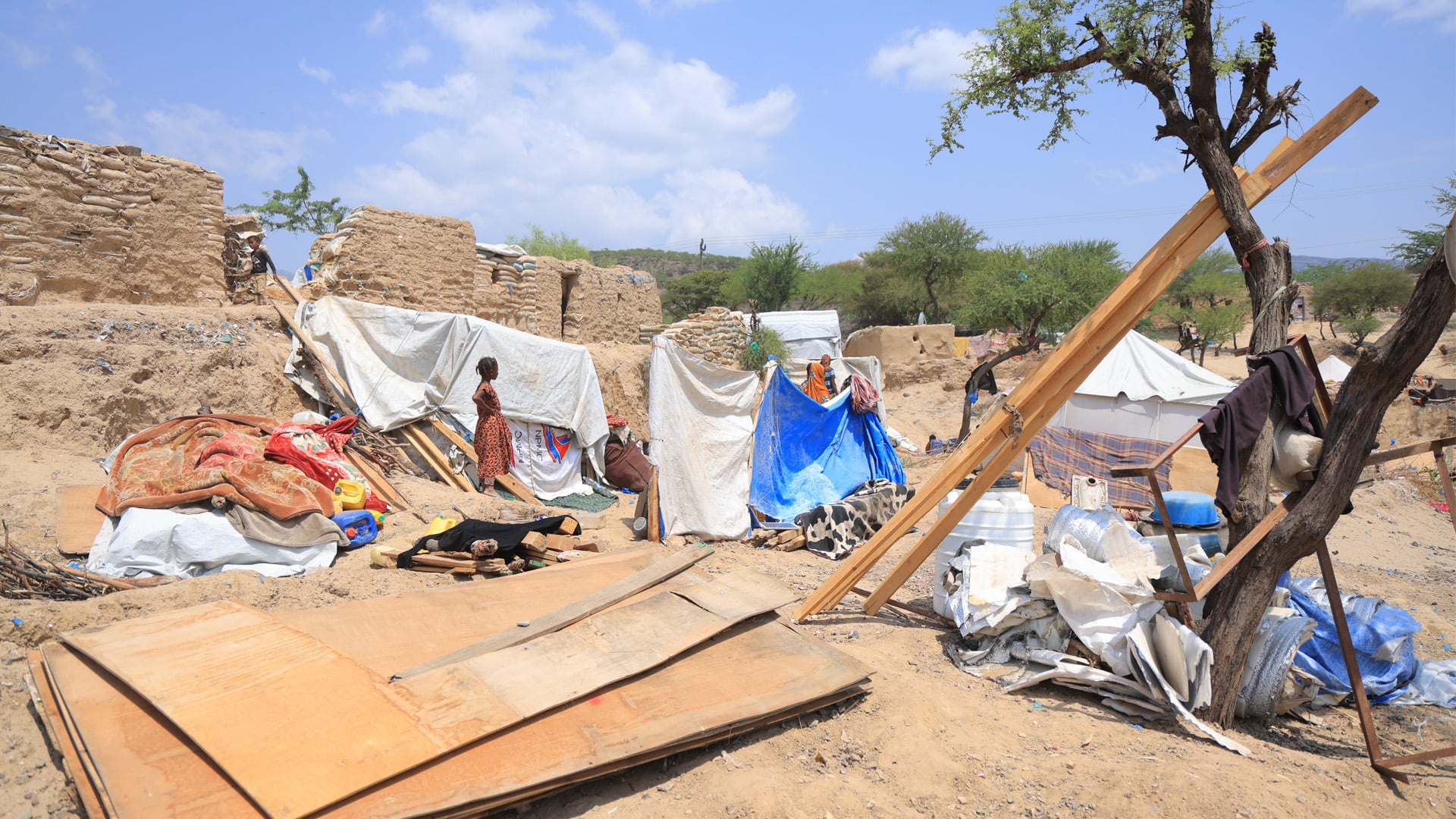
Fawzi al-Habashi, director of the Better Life Association, a Taiz-based aid group, told The New Humanitarian that vulnerable groups — such as displaced families and the Muhammasheen — are desperately in need of more assistance.
The Muhammasheen, which means “the marginalised ones”, are a minority group in Yemen who some believe are descended from African slaves or soldiers. They have long been discriminated against, and most live in slums and extreme poverty.
“In the recent escalation, we saw many displaced families fleeing their homes for the second or third time. As they fled and arrived at existing displacement camps, it placed immense pressure on the host communities,” al-Habashi said, noting that there was often not enough water for new arrivals.
“All Yemenis have been impacted by the recent increase in fuel and food prices, but vulnerable communities – such as displaced people and those who lost their jobs – are the most affected because they lack a source of income to help them survive the crisis.”
Aid groups are doing what they can under severe budget constraints, but shrinking funds are severely hindering the response, he said, adding that it was important to keep in mind that humanitarian needs didn’t just start with the recent wave of displacement or the US-Iran war.
“All Yemenis have been impacted by the recent increase in fuel and food prices, but vulnerable communities – such as displaced people and those who lost their jobs – are the most affected because they lack a source of income to help them survive the crisis,” al-Habashi said.
He called on the international community to increase support for Yemen so that groups like his can help more people: “Displaced families and other vulnerable people are being hit twice, first by the economic crisis, and now by the recent escalation, so the international community must not forget them.”
Murshed, newly displaced in Taiz, also appealed to international organisations for help, but she spoke too of the solidarity she has seen among other Yemenis who are sharing what little they have with those most in need.
“We sleep under the same small, overcrowded tent with another family because we have no alternative. Water is scarce, and food depends on whether others have enough to share with us,” she said. “The displaced families in this camp understand our suffering and do not hesitate to help us… but they are in dire need too, so we are all sharing the burden.”
Edited by Annie Slemrod.


